
Paradise Valley is a small, entirely residential town in the middle of a sprawling metropolitan area. If you are tracking Paradise Valley home prices, you might wonder what holds its values up.
Anne Sostman @ The Brokery wrote this post from her work with buyers and sellers in Scottsdale, Paradise Valley and Arcadia.
The answer lies in deliberate choices made decades ago. Paradise Valley’s pricing power is not an accident of geography or a temporary market trend. It is the direct result of structural scarcity and strict zoning.
This guide breaks down exactly why Paradise Valley is expensive, what factors protect its property values, and what owners must understand before they place their estates on the market.
The Town That Decided What It Wanted to Be
To understand the PV real estate market, you have to look at the foundational rules of the town. Paradise Valley has kept commercial development out of its borders, apart from its resorts.
Drive through the town, and you will quickly notice what is missing. There are no strip malls. You will find no corporate office parks. There are no towering apartment complexes or high-density condominium developments. Instead, you have about 12,700 residents (2020 Census) living on roughly fifteen square miles of land. The town zoned this land almost entirely for single-family residential use.
That specific decision, fiercely protected at the municipal level for generations, created a fascinating supply and demand dynamic. When a town ensures its land cannot be subdivided into higher-density, more affordable uses, scarcity becomes a permanent structural feature. In a market where buyer demand continues to grow year after year, that structural scarcity translates directly into immense pricing power.
What Drives the Premium
Several factors work together to support Paradise Valley values: one-acre minimum lots, mountain views, and a central location.
No Density, No Dilution
Almost every luxury market in the country features pockets of high-value homes surrounded by more affordable subdivisions. The presence of that surrounding, lower-priced inventory naturally puts a ceiling on what buyers will pay. Appraisers look at nearby sales, and adjacent neighborhoods can pull top-end values down.
Paradise Valley does not suffer from this problem. The entire enclave is the premium product. Because the town maintains such strict zoning laws, there is no adjacent, high-density comparison that dilutes the value of these estates. When every home around you sits on a massive lot and meets the same high standard, property values compound rather than compete.
Land Size and Architectural Integrity
The minimum lot size in Paradise Valley is one full acre. In practice, many estates sit on two, three, or even five acres.
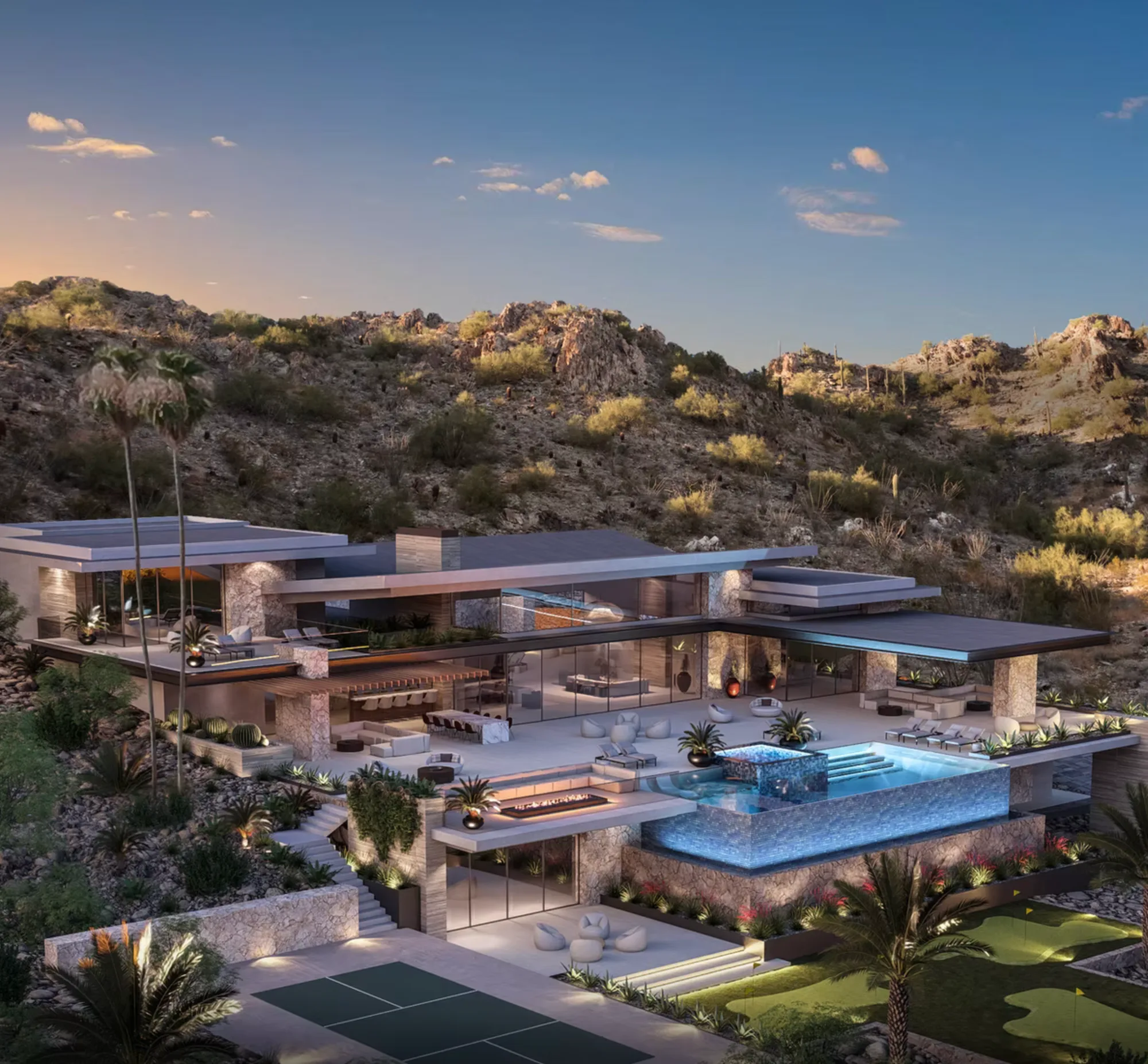
That massive amount of space translates into privacy. It provides the necessary room for deep setbacks from the street, detached guest structures, massive resort-style pools, and the kind of sprawling outdoor living spaces that Arizona buyers assign massive value to. You cannot replicate large lots in established urban markets. You can only own them where they already exist.
Furthermore, this space allows for incredible architectural integrity. Homeowners have the canvas to build sprawling, single-level estates without compromising their yard space. From sharp, contemporary glass masterpieces to timeless Mediterranean villas, the architecture breathes. The sheer size of the properties ensures that even vastly different architectural styles sit harmoniously next to one another.
The Mountain Context
Geography plays a massive role in the appeal of the area. Camelback Mountain, Mummy Mountain, and the surrounding desert peaks create a dramatic visual backdrop that no developer can ever build over or around.
Views in Paradise Valley are permanent in a way that views in newer, master-planned communities are not. Buyers who have purchased in other booming Arizona markets often watch adjacent development change their outlook entirely. They see a new subdivision pop up where they once enjoyed an open desert horizon. Paradise Valley buyers understand exactly what they are paying for. They secure a view that will remain untouched for generations.
Proximity Without Compromise
Usually, buying a private, multi-acre estate means moving to the distant outskirts of a city. Paradise Valley defies this rule entirely. The town sits perfectly positioned in the center of the action.
Residents live just minutes from the dining and shopping of Old Town Scottsdale. They have immediate access to the Biltmore area and the broader Phoenix metropolitan core. Buyers do not have to sacrifice their access to fine dining, luxury retail, or the airport to gain privacy.
What Sellers Should Know
While the market is incredibly strong, owning a property here is not an automatic guarantee of maximum value at the time of sale. Selling Paradise Valley luxury real estate requires a highly strategic approach.
Pricing a property here requires deep nuance because direct comparables are incredibly thin. No two estates are identical. One home might feature sweeping views of Camelback Mountain, while another two streets over sits tucked away in a private wash. A mispriced listing in this market does not just sit quietly on the MLS. It actively signals weakness to a well-informed buyer pool. Extended days on the market attract discount-motivated buyers and train the market to expect massive concessions.
The sellers who achieve strong outcomes are those who clearly understand their specific position within the broader PV real estate market. They enter the market at a price that creates immediate urgency rather than skepticism. They invest in preparation, ensuring their property presentation matches the expectations of buyers at this price level. Every detail, from the landscaping to the lighting, must reflect the premium price tag.
The Market Right Now
The current landscape for Paradise Valley real estate remains incredibly robust.
We are seeing a shift in how homes here are used. Historically, many were bought as second or winter homes. Today, more are bought as primary residences, and that shift toward full-time use has sustained demand.
Inventory remains tight, especially for completely updated, move-in-ready estates. Buyers have little appetite for taking on multi-year renovation projects, so fully finished, turnkey homes command premiums and move faster.
Conclusion: Preparing for Your Next Move
Paradise Valley’s limits on commercial development, one-acre minimum lots, mountain views, and central location define its real estate market.
If you own a home here and are thinking about a sale in the next twelve to twenty-four months, preparation is everything. Understanding exactly where your specific property sits in the current supply picture is the first step. You need a clear, objective analysis of your home’s value and a tailored strategy for how to present it to a discerning global audience.
Strategic planning shapes the outcome of the sale. If you want to explore your property’s potential in today’s market, reach out to an expert who understands the unique mechanics of Paradise Valley. Take the time to build a smart, targeted approach before you list.